Best Free Geography Games for Kids
By Jangul Aslam · Published 2026-06-19
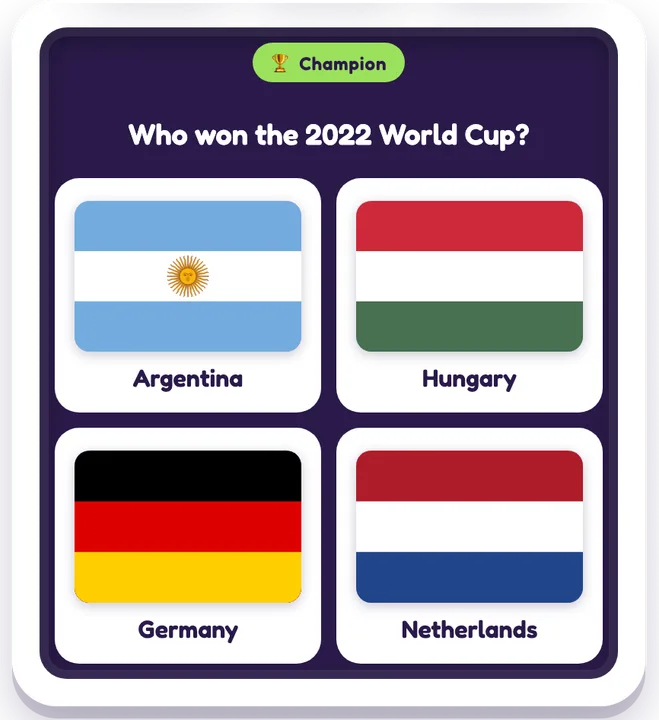
Geography is one of those subjects that almost never sticks from a textbook but locks in fast the moment it turns into a game. My son Adiv and I found that out the slow way: we kept hitting moments — a flag on the news, a country in a quiz, a host city for the World Cup — where neither of us could place the thing on a map. So we built games to fix it, for us first and then for everyone.
This is a short, honest roundup of the geography games on iplay.free, grouped by what each one actually teaches. They're all free, with no ads, no sign-up and no download, and they run in 12 languages. You can hand a kid any of them on a phone, tablet or laptop and not have to hover.
What "geography for kids" really means
When people say geography, they usually mean three different skills bundled together:
- Recognising flags — connecting a pattern of colours and symbols to a country's name.
- Knowing where places are — being able to actually find a country on a map or globe, not just say "somewhere over there."
- Joining facts to places — who hosts what, which countries are big or small, what's next to what.
A good set of games should cover all three without feeling like homework. Here's how ours map onto them.
Learn the flags: Flag Guess
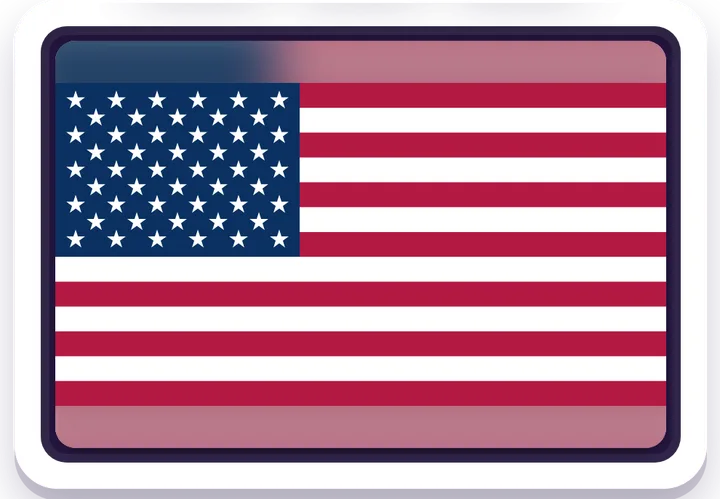
The fastest on-ramp into world geography is flags, because they're everywhere — sports, news, packaging, the back of a chocolate bar. Flag Guess is dead simple: it shows you a flag, you name the country. That's it.
What makes it work is repetition with instant feedback. After a week of short rounds, a kid stops mixing up the dozen red-white-and-blue flags that all look alike at a glance, and starts noticing the small tells — the shade of red, the position of a star, whether the stripes run across or down. It's a surprisingly grown-up skill dressed up as a quick game, and it's genuinely useful: once you know the flags, half the world's news suddenly has a place attached to it.
Flag Guess is the game we'd start almost any kid on, because it gives early wins fast and those wins pull them toward the harder stuff.
Know where places are: Globe Trek
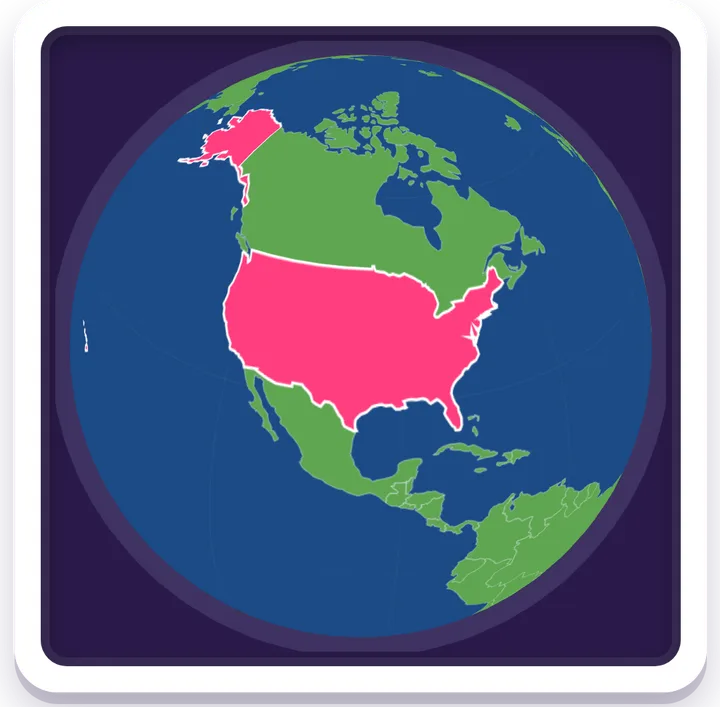
Naming a country is one thing; finding it is another. Globe Trek is built around a real, spinnable 3D globe — you're asked to find a country, and you spin and tap the actual spot on the planet.
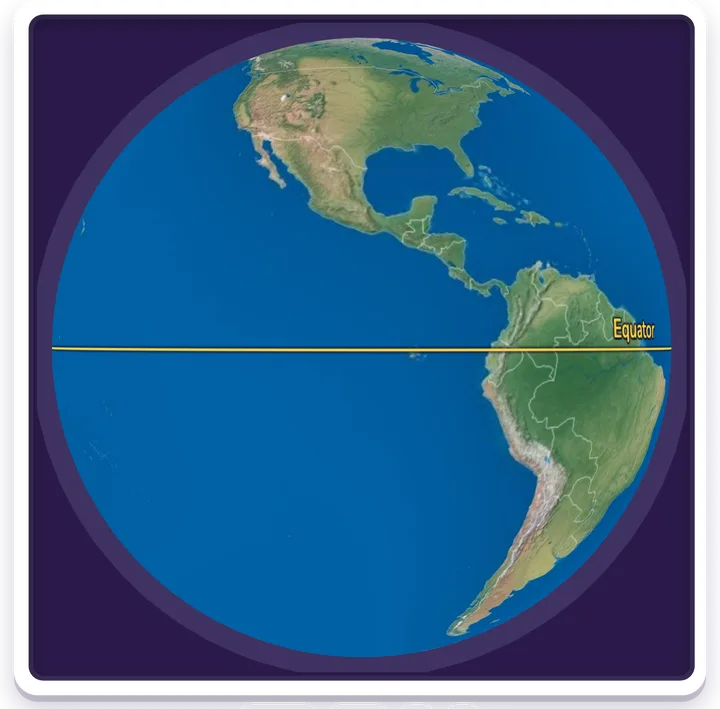
This is the one that teaches spatial geography, and it's the part most quiz apps skip. There's a real difference between knowing "Kenya is in Africa" and being able to put your finger on it — east coast, on the equator, next to Tanzania and Ethiopia. Globe Trek drills that second, deeper kind of knowing. Adiv used it to finally get the World Cup host cities straight, spinning from Boston on one coast to Vancouver on the other, and it stuck in a way a flat classroom map never did.
A 3D globe also fixes a quiet problem with flat maps: they distort sizes near the poles, so kids grow up thinking Greenland is the size of Africa. On a globe, the real proportions are right there.
Both Flag Guess and Globe Trek live in our geography games hub, and they pair naturally — names from one, locations from the other.
Join facts to places: the World Cup angle
Here's the trick we stumbled into: the easiest way to make geography matter to a kid is to attach it to something they already care about. For a lot of families right now, that's soccer. The World Cup is a geography lesson in disguise — every four years, a few dozen nations' flags, locations and host cities land on the same screen at once.
So a couple of our geography-teaching games sit in the sports side of the catalog:
- Soccer Globe Hunt — the same 3D globe as Globe Trek, but now you're finding the host nations. Where was the 1950 tournament? Where's 2026? Spin and tap. It's pure location practice wrapped in something a young fan will play for fun.
- Soccer Cup Quest — a quiz that works back through the tournaments: who hosted, who won, the final score, the top scorer. It quietly builds a mental map of which countries show up again and again, and where they are.
Both live in the sports games hub, and they feed straight back into the plain geography games — a kid who learns the host countries from soccer suddenly recognises them in Flag Guess and Globe Trek too. If you want the whole picture, we wrote a full roundup of our free World Cup soccer games too.
A quick map of which game teaches what
| Game | What it teaches | Hub |
|---|---|---|
| Flag Guess | Recognising flags | Geography |
| Globe Trek | Where countries are (3D) | Geography |
| Soccer Globe Hunt | Finding World Cup hosts | Sports |
| Soccer Cup Quest | Facts joined to countries | Sports |
How to actually build the habit
A few things we've learned watching Adiv (and his friends) play:
- Start with flags, then move to the globe. Names first, locations second — the order matters, because recognising a country makes finding it far less abstract.
- Keep sessions short. Five or ten minutes of Flag Guess beats a long slog. Geography sticks through little-and-often repetition, not marathons.
- Tie it to real life. When a country comes up on the news or in a match, pull up Globe Trek and find it together. The connection between "I saw this today" and "here it is on the globe" is where it really lands.
- Let the World Cup do the heavy lifting. If a kid loves soccer, Soccer Globe Hunt is geography they'll choose to play. Lean into whatever they already care about.
Real flags, real facts, no marks
One thing we're careful about: everything is built clean-room. We use the actual flags and verified facts — capitals, locations, who hosted which tournament — but no team logos, badges or trophies. The point is to teach the world as it is, accurately, not to borrow anyone's branding. We research the fact files ourselves and double-check the bits that are easy to get wrong (a small example from football: England plays as England, with the St George's Cross, because the UK doesn't field a single team).
Quick answers
What are the best free geography games for kids? Start with Flag Guess for flags and Globe Trek for finding countries on a real 3D globe. Both are free, ad-free and need no sign-up. The full set is in the geography games hub.
At what age can kids start learning geography with games? Flag recognition works from around age 5 or 6 with a grown-up nearby; finding countries on a globe and the World Cup quizzes suit roughly 8 and up. None of the games have an upper age limit — adults play them too.
How do kids learn where countries are? A 3D globe like the one in Globe Trek beats a flat map, because it shows real sizes and positions without the distortion flat maps add near the poles. Short, repeated rounds tied to something they already care about — like the World Cup — make the locations stick.
Are these geography games really free? Yes. Everything on iplay.free is free, with no ads, no sign-up, no download and nothing to buy. It opens in any browser, in 12 languages.
Do you need to download anything or make an account? No. Every game runs straight in the browser. There's nothing to install, no login, and nothing collected — you can hand over a device without worrying about ad slots or sign-up walls.
Where to go next
If you've got a curious kid and a few spare minutes, this is the rare screen time that quietly teaches them the shape of the world. Start with Flag Guess, spin the globe in Globe Trek, and if there's a soccer fan in the house, let Soccer Globe Hunt do the rest.
— Jangul & Adiv