Free Memory Games for All Ages
Memory games build concentration and recall, and they're great for younger players and grown-ups alike. Free forever — no ads, no sign-ups, and no downloads, on any device.
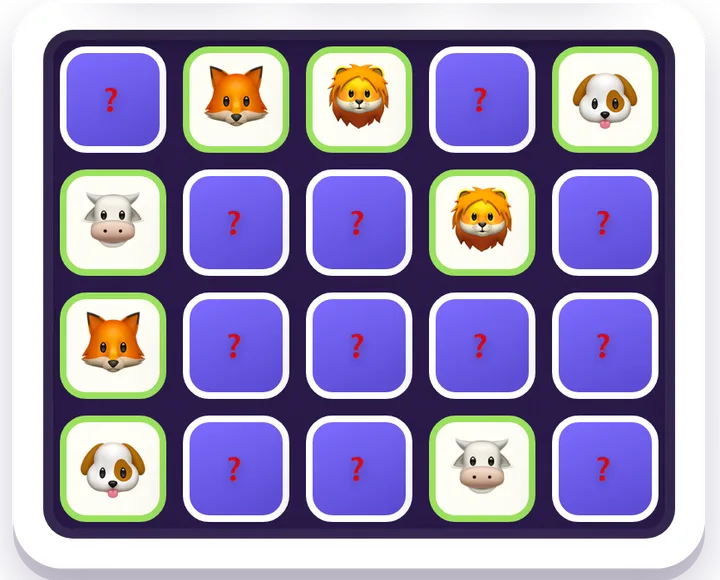
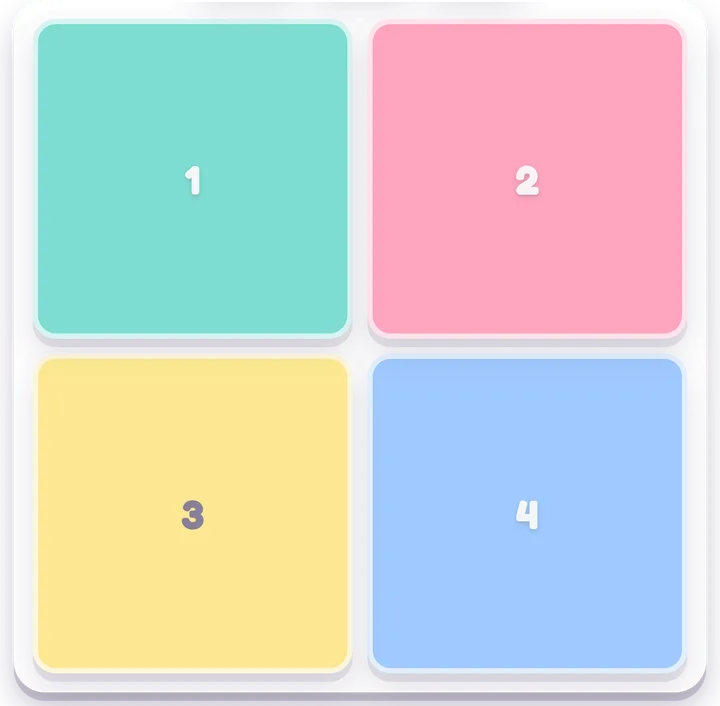
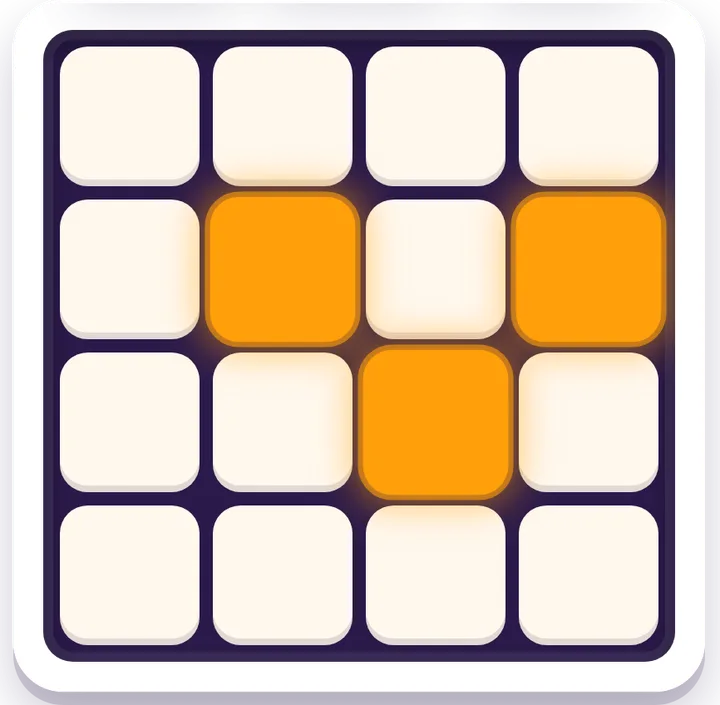
This is the youngest-friendly corner of the site. Memory Match is the classic pairs game and starts at a 2×3 board — six cards, small enough for a four-year-old to win — then grows through 4×4 and 5×6 up to 6×6. Simon is the colour-and-sound sequence game: it plays a pattern, you play it back, and every round adds one more step. Pattern Flash lights up a few squares of a grid for a moment and asks you to tap them back — the count climbs as the rounds go on, and the grids grow from 4×4 to 6×6. None of them needs reading, so a child who can't read yet can play all three without help.
Play these free games
What these games build
short-term and visual-spatial memory, concentration, and sequencing.
Frequently asked questions
- What age are memory games suitable for?
- Memory Match works from about age 4 on the smallest board, and Simon and Pattern Flash from about 5, since all three rely on recognising colours, pictures and places rather than words. Older children and adults play the same games at the bigger boards and faster speeds, which is what makes them easy to play together.
- How does the difficulty grow?
- Memory Match has five board sizes, from a six-card warm-up to a 6×6 board of eighteen pairs, so you can raise it one notch at a time. Simon raises itself — each round adds a step to the sequence — and the Fast setting shortens the gaps between the flashes. Pattern Flash lights more squares as the rounds go on, and each level moves to a bigger grid or gives each square less time.
- Do memory games really improve concentration?
- Free memory games like these give short-term memory honest, focused practice, and the progress is visible: a child who could hold four cards last month holds six this month. Simon adds sequencing, which is the harder skill — remembering the order, not just what appeared — and Pattern Flash trains visual-spatial memory: where things were. Neither is a school exercise, but both ask for sustained attention in a way quicker games don't.
- Are they good to play with a young child?
- That's the best way to use them. Memory Match on a small board is a genuinely fair game between a four-year-old and a grandparent — young children often win — and Simon works as a pass-the-device challenge to beat the last streak. A round lasts a minute or two, which matches the attention span you actually get.
- What is Pattern Flash?
- A visual memory game: some squares of a grid light up for a moment, then you tap the same squares from memory, in any order. Later rounds light more squares; a wrong square costs one of three lives and shows you the pattern again. A Slower flashes setting makes it gentler for younger players.