
Free World Cup 2026 Soccer Games — Learn & Play
By Jangul Aslam · Published 2026-06-19
This one is personal.
My son Adiv and I have been following the 2026 World Cup the way a lot of families do — matches on in the evening, a wall chart, arguing about who's going to win. And somewhere in the group stage we both had the same quiet realisation: for the biggest sporting event on Earth, we knew surprisingly little about it.
A team would walk out behind its flag and one of us would ask, "wait — where is that, actually?" We couldn't place half the qualified countries on a map. We didn't know their flags apart. We had no idea which were tiny and which were huge, which cities were hosting this time, or which had hosted in tournaments long before either of us was born. We knew the football. We didn't know the world the football comes from.
So we did the thing we always do when we get curious about something: we turned it into games.
The World Cup is a geography lesson in disguise
Once you notice it, you can't un-notice it. Every four years the whole planet's attention lands on a few dozen nations at once — their flags, their capitals, their populations, their host cities and stadiums. It's a month-long tour of the world, and most of us let it wash past while we watch the scores.
We thought: what if you could actually keep some of that? Learn the flags as you cheer for them. Find the host countries on a globe. Remember who won where, and when. Not as homework — as the same kind of quick, fun puzzle you'd play on the bus anyway.
The 2026 World Cup: three host countries, 16 cities
This is the part that sent us down the rabbit hole, so here's the lay of the land — the bits we wish we'd known on day one.
For the first time ever, three countries are co-hosting: the United States, Canada and Mexico. It's also the biggest World Cup in history — 48 teams (up from 32) playing 104 matches (up from 64) across 16 host cities:
- United States — 11 cities: Atlanta, Boston, Dallas, Houston, Kansas City, Los Angeles, Miami, New York/New Jersey, Philadelphia, the San Francisco Bay Area, and Seattle.
- Mexico — 3 cities: Mexico City, Guadalajara and Monterrey.
- Canada — 2 cities: Toronto and Vancouver.
It stretches from Boston on the US east coast all the way to Vancouver on Canada's west, and down to Guadalajara in central Mexico — one tournament spanning a whole continent. Spinning between those cities on Globe Trek is, honestly, how Adiv finally got them straight.
World Cup 2026 schedule: how the month unfolds
The tournament runs from 11 June to 19 July 2026. It opened in Mexico City, at the historic Estadio Azteca — set to become the first stadium ever to feature at three men's World Cups — and the final is on 19 July at the New York/New Jersey stadium (MetLife). Roughly how the month breaks down:
| Stage | Dates (2026) |
|---|---|
| Group stage | 11 – 27 June |
| Round of 32 | 28 June – 3 July |
| Round of 16 | 4 – 7 July |
| Quarter-finals | 9 – 11 July |
| Semi-finals | 14 – 15 July |
| Third-place play-off | 18 July |
| Final | 19 July |
Because there are 48 teams, the group stage is 12 groups of four. The top two from each group, plus the eight best third-placed teams, go through to a brand-new Round of 32 — and from there it's straight knockout to the final.
World Cup 2026 base camps: where the teams stay
Here's something we'd never once thought about: every squad sets up a "base camp" — its home-away-from-home for the tournament, a training ground plus a team hotel where the players sleep, train and recover between matches. For 2026 the base camps are scattered across all three host nations (most in the US, a handful in Mexico, two in Canada). A few that made us smile:
- Kansas City is a quiet hub — the defending champions Argentina, plus England and the Netherlands, all based themselves in and around it.
- Brazil set up in Morristown, New Jersey; France near Boston; Germany in Winston-Salem, North Carolina; Spain in Chattanooga, Tennessee; Portugal in Palm Beach Gardens, Florida.
- Texas drew a cluster too — Sweden and Czechia both based in the Dallas area (Frisco and Mansfield), with DR Congo down in Houston.
- The hosts stay close to home: the USA at Irvine, California; Mexico in Mexico City; Canada around Vancouver.
- A couple even chose Mexico's resort coast — Uruguay based itself near Cancún.
- The most unusual call was Iran's. Originally slated for Tucson, Arizona, their base was moved across the border to Tijuana, Mexico — with FIFA's approval, over security concerns — so Iran trains in one host country while playing its group games just up the coast in Los Angeles.
It's a whole second map laid over the tournament: not just where the matches are played, but where 48 nations are quietly living for a month. (Finding all of their home countries is exactly what Soccer Globe Hunt turns into a game.)
And it turns out a lot of people are watching alongside us. FIFA reported that around 5 billion people engaged with the 2022 World Cup in Qatar — the most-followed edition ever — with roughly 1.5 billion tuning in for the final between Argentina and France alone. (The 2018 tournament drew about 3.5 billion television viewers — more than half the planet old enough to watch.) Whatever the exact count, it's safe to say this is the closest thing humanity has to watching one thing together. We figured a few of those billions might enjoy learning the world behind it.
Start with the world: flags and a 3D globe
Before any of the tournament history, there are two games we built for pure geography — they work all year round, World Cup or not:
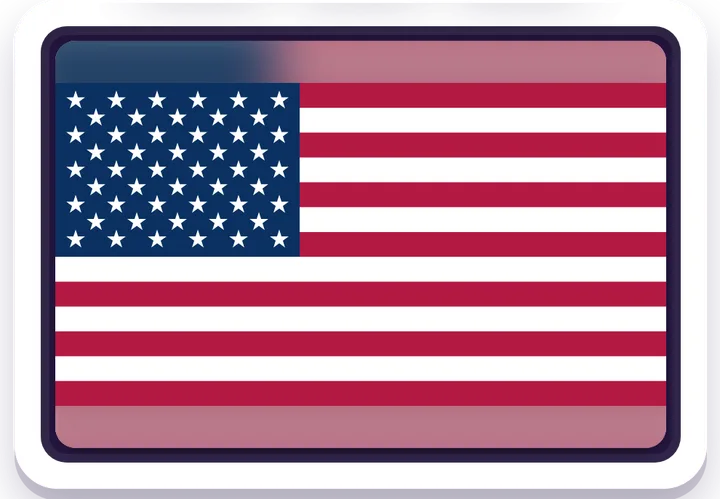
- Flag Guess — see a flag, name the country. It's the fastest way we've found to stop confusing one red-white-and-blue flag for another. After a week of this, the opening ceremony makes a lot more sense.
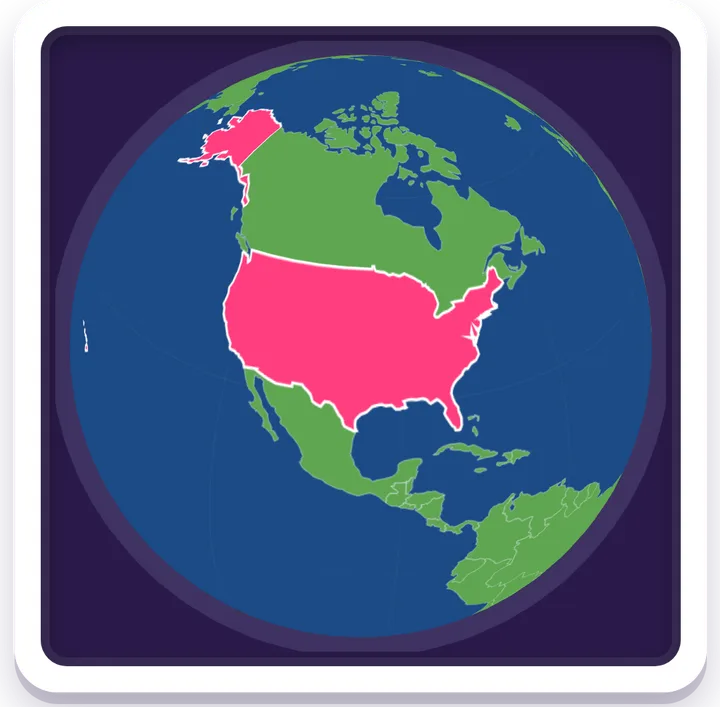
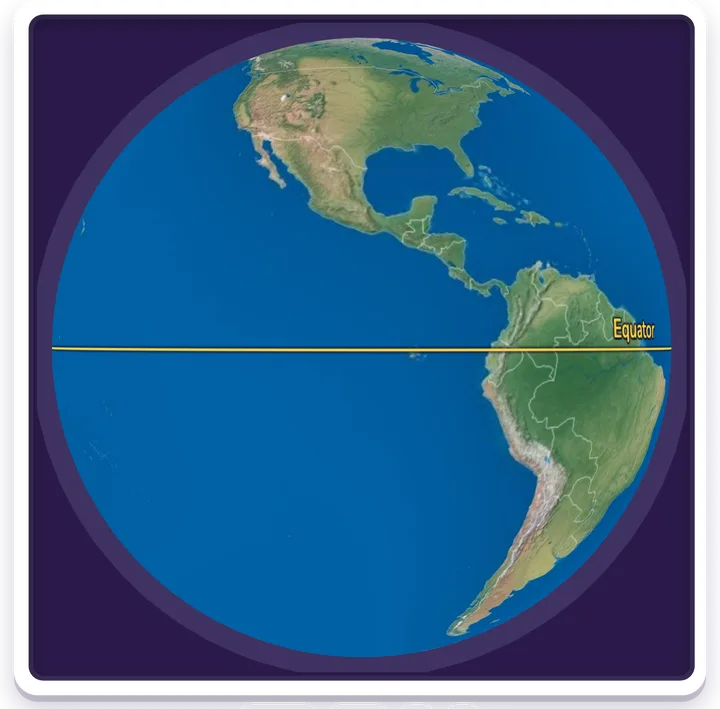
- Globe Trek — spin a real 3D globe and tap the country you're asked to find. You learn where places actually are — not "somewhere in Africa," but the exact spot, next to which neighbours, on which coast.
Both live in our geography games hub, and both feed straight into the World Cup set below.
Then the World Cup history set — seven games
This is the part the tournament inspired. Seven small games, each teaching a different slice of World Cup history — hosts, champions, scores, top scorers, cities — using only facts and flags (no logos, no badges, just the countries themselves). They all live in the sports games hub:
- Soccer Cup Quest — the all-rounder quiz. Who hosted, who won, the final score, the top scorer — working back through the editions.
- Soccer Globe Hunt — the same 3D globe, but now you're finding the host nations. Where was 1950? Where is 2026? Spin and tap.
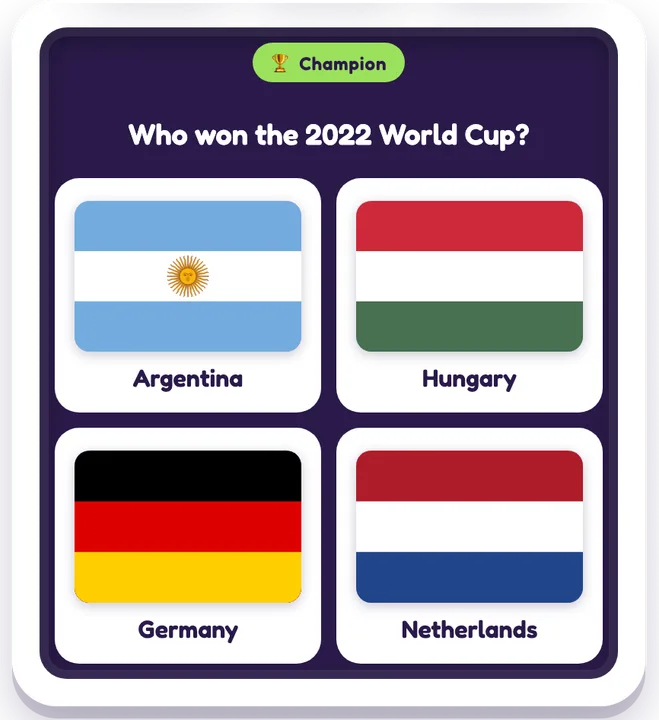
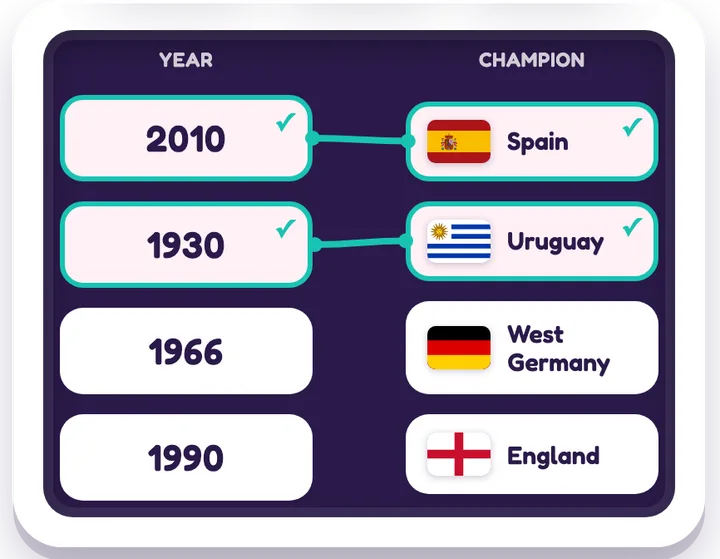
- Soccer Champions Match — link each year to the country that lifted the trophy. You quickly learn that a handful of nations have won most of them.
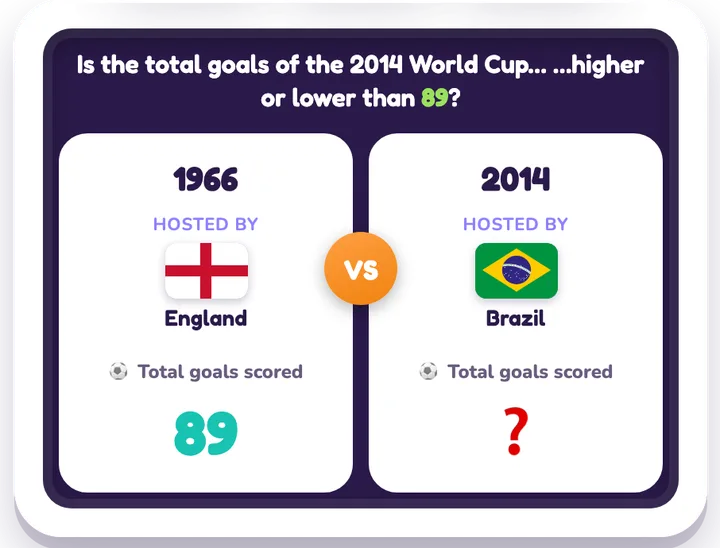
- Soccer Cup: Higher or Lower — two tournaments, one question: which had more goals, more teams, the bigger final? A surprisingly addictive way to get a feel for how the competition has grown.
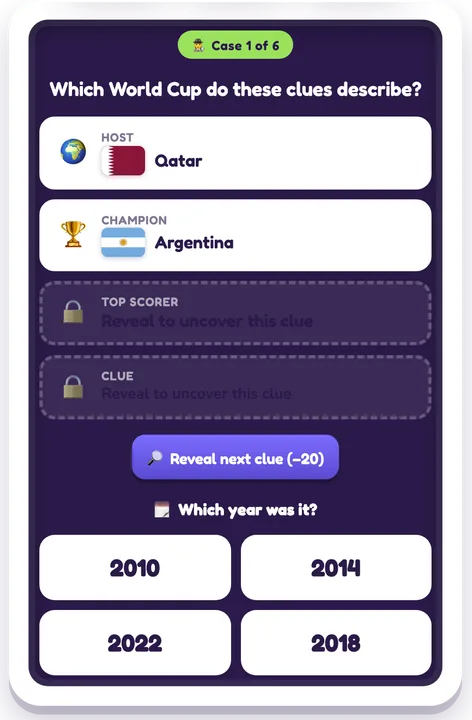
- Guess the Soccer Cup — a detective game. Clues reveal one at a time — the host, the champion, the top scorer — and you name the year with as few clues as you dare.
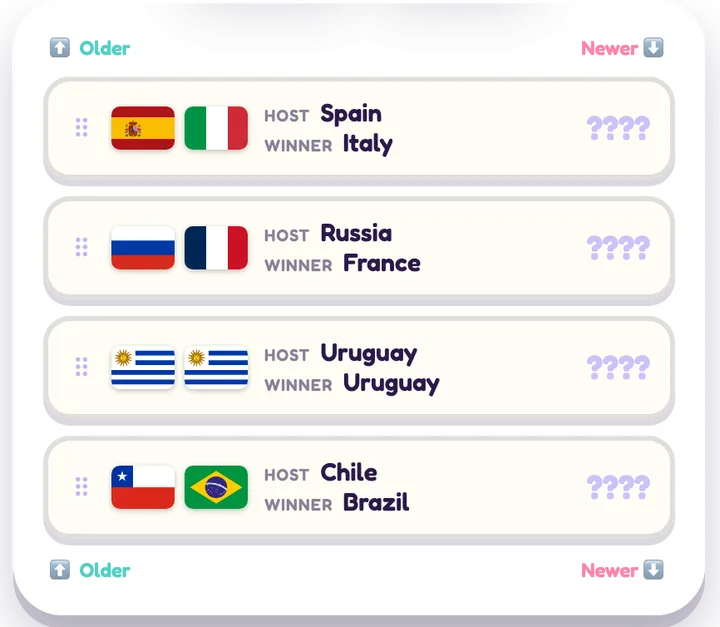
- Soccer Cup Timeline — drag the editions into the right order, oldest to newest. It rewires how you picture the whole history end to end.
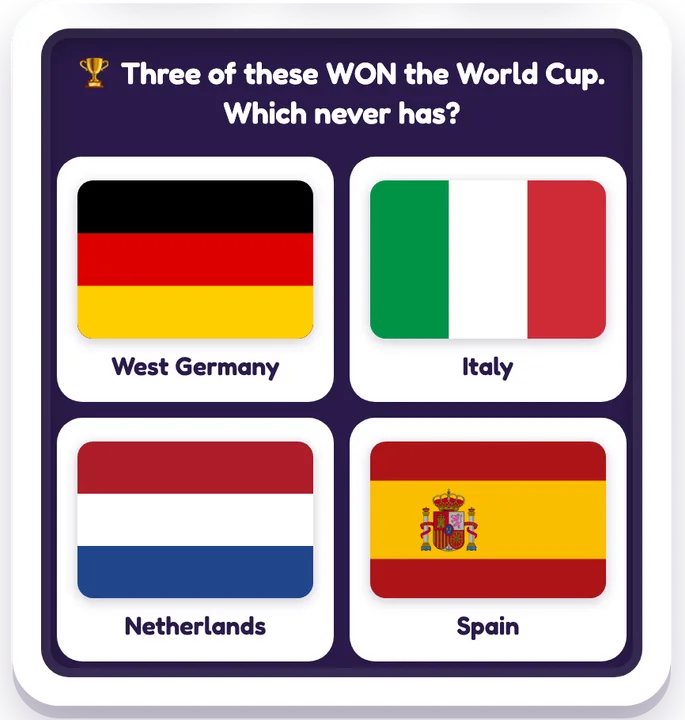
- Soccer Odd One Out — four countries, one rule ("three of these won the World Cup — which never has?"). Tap the one that doesn't belong.
Play them in any order. Most people start with the quiz, get caught out by a host city, and end up on the globe.
A bit about the facts (and one we double-checked)
We're careful with the history. Every game runs on a single fact file we researched and checked ourselves — hosts, finalists, scores, top scorers, the lot — and we describe the tournament in plain words rather than borrowing anyone's badges or trophies.
That care is also why the viewership number above says "around 5 billion" and not the "4 billion" we'd both half-remembered: when we went to check it for this post, FIFA's own figure for 2022 was higher than we thought. Small thing — but if we're going to teach the World Cup, we'd better get the World Cup right. (You'll spot the same honesty in a small detail: England plays as England, with the St George's Cross, because in football the United Kingdom doesn't field one team — England, Scotland, Wales and Northern Ireland each have their own.)
Quick answers about the 2026 World Cup
Who is hosting the 2026 World Cup? The United States, Canada and Mexico — the first World Cup ever shared by three countries, spread across 16 host cities.
How many teams and matches are there? A record 48 teams (up from 32) play 104 matches (up from 64) — the largest World Cup in history.
When is the 2026 World Cup final? Sunday 19 July 2026, at the New York/New Jersey stadium (MetLife). The tournament opened on 11 June in Mexico City.
What is a team "base camp"? Each squad's home-away-from-home for the tournament — a training ground plus a team hotel where players rest and prepare between matches. In 2026 they're spread across all three host nations.
Are there free games to learn the World Cup's flags and countries? Yes. Our sports games and geography games hubs are free, with no ads and no sign-up — start with Flag Guess and Soccer Cup Quest, or browse all 33 free games.
Why it's free, and good for the whole family
Everything on iplay.free is free, with no ads, no sign-up, no download, and nothing to buy — it just opens in any browser, on a phone, tablet, or the family laptop. The games run in 12 languages, so wherever you're watching from, you can play in yours. There's nothing to mistap into, nothing collected, and nothing that needs a grown-up's password.
If you've got kids glued to the tournament, this is the rare screen time that quietly teaches them something — the map of the world, told through the game they already love. During the 2026 World Cup it's a brilliant half-time activity; long after, it's still a solid geography workout.
That's the whole idea, really. Adiv and I started watching as fans and ended up learning more than we expected. We built these so you can too.
— Jangul & Adiv