
Free Math Games for All Ages
Number games make maths feel like play. These free math games build number sense and logical thinking — with no ads, no sign-ups, and no downloads, on any device.
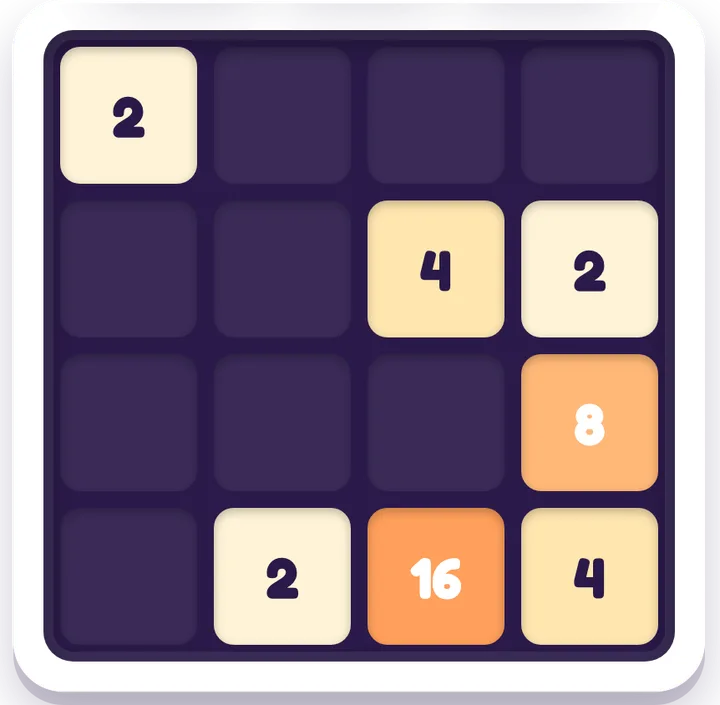
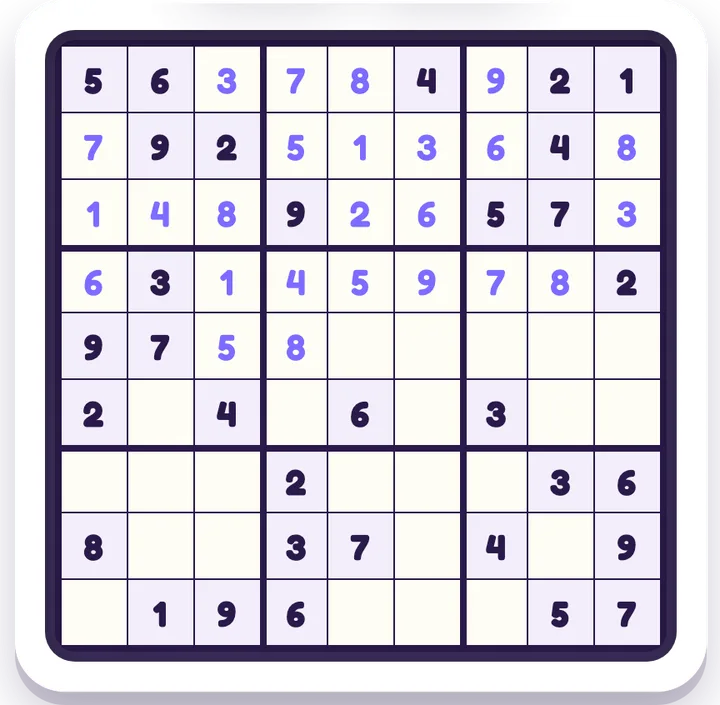
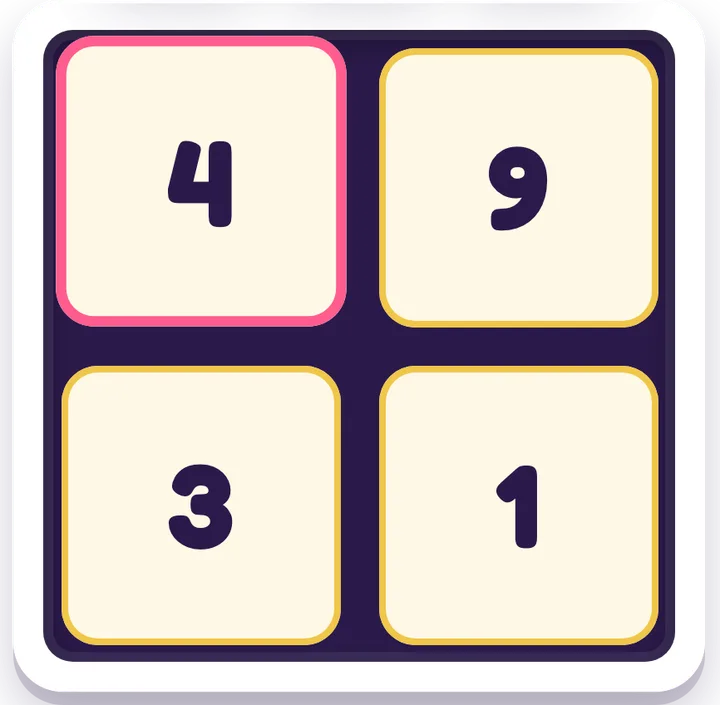
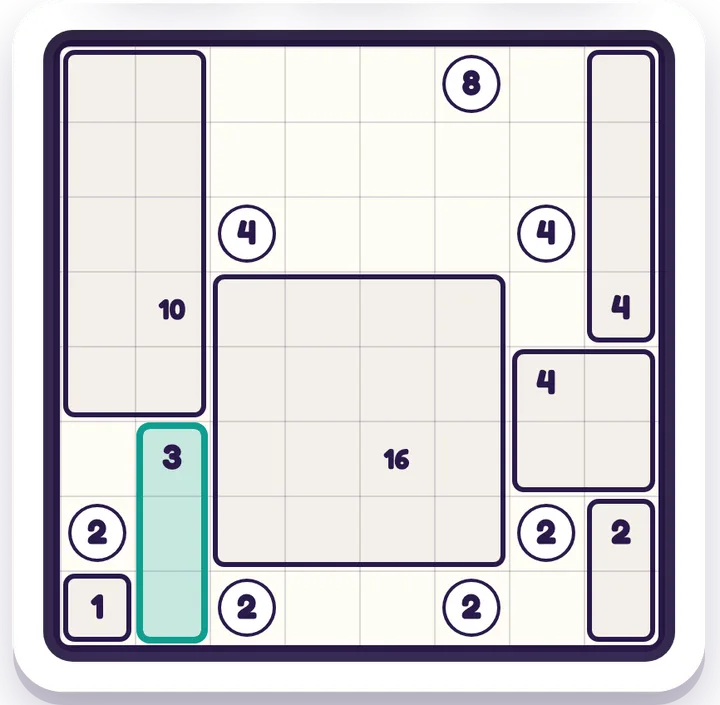
These math games pull in different directions, which is why they work well together. Sudoku is slow and deliberate — nothing counts down and there's no arithmetic, just working out where each number can and can't go — and it's a gentle first step for a child who is new to number puzzles. 2048 is the quick one: slide the tiles, merge matching numbers, and watch 2 become 4, then 8, then 16. Number Smith is the mental-maths workout: join four numbers with + − × ÷ to hit 10 or 24, so every round is a small arithmetic puzzle that clicks into place when it lands. Box Split turns multiplication into a logic puzzle: split the grid into rectangles so each number becomes the area of its own box, which quietly practises times tables and factor pairs. Number Smith's Make 10 and Box Split's small grids work from about age 7; the others suit roughly 8 and up, and adults play them just as much.
Play these free games
What these games build
number sense, mental arithmetic, and logical problem-solving.
Frequently asked questions
- Are these any good for a child who says they hate maths?
- Often, yes, because none of them looks like schoolwork. Sudoku asks for no arithmetic at all — it's pure logic about where a number fits — 2048 turns doubling into something you do with your thumb, Number Smith turns sums into a puzzle you want to crack, and Box Split hides multiplication inside a grid you split into boxes. The number sense arrives sideways, with no worksheet in sight.
- What age is Sudoku right for?
- From about 8, once a child can hold a rule in mind while scanning a grid. Start on Easy, which fills in more numbers so every step can be reasoned out, then move to Medium and Hard as fewer clues are needed. Show them the Notes tool early — pencilling in maybe-numbers is how most solvers actually work.
- What does 2048 teach?
- Powers of two, mainly: every merge doubles a tile, so 2, 4, 8, 16 and 32 stop being abstract and become shapes you recognise. It also rewards planning — keeping the biggest tile in one corner is the difference between stalling at 256 and reaching 2048. Three board sizes help too: 3×3 is quick and unforgiving, 5×5 is the relaxed one.
- What is Number Smith?
- The classic make-24 puzzle: four numbers, the four operations, one target. Easy asks for 10 with numbers up to 9; Medium and Hard ask for 24, and the trickiest Hard puzzles need a fraction on the way, like 8 ÷ (3 − 8 ÷ 3). Every puzzle is checked to be solvable, a hint suggests the next good step, and Undo is free — so trying things is part of the fun.
- What is Box Split?
- A rectangle logic puzzle. Split the whole grid into boxes so that every box holds exactly one number, and that number is how many squares the box covers. Tap a number to see its factor pairs — 12 can be 1 × 12, 2 × 6 or 3 × 4 — and the boxes that still fit. Grids grow from 5×5 on Easy to 9×9 on Expert, every puzzle has exactly one answer you can reason your way to, and a hint always shows a box that must be right, with the reason.
- Can I use these free math games in class?
- Sudoku suits a silent, self-paced early-finisher task, a round of 2048 fits a short brain break with a ready-made talking point about doubling, and Number Smith makes a quick mental-maths warm-up — put the four numbers on the board and let the class race to the target. They also work on a shared classroom screen as a whole-class puzzle, with children calling out the next move before you make it.