
Free Logic Games for Tweens (Ages 10-12)
By Jangul Aslam · Published 2026-06-07
Somewhere around ten, easy games stop holding a kid's attention. Tweens want a real challenge — a puzzle that pushes back, that they can chip away at and crack on their own. The trouble is that most "free puzzle" sites bury that challenge under ad banners, pop-ups, and "sign in to continue" walls. It shouldn't be like that. Every game on iplay.free opens straight in the browser — no ads, no sign-up, no download, nothing to buy.
That matters more than it sounds for this age. Ten to twelve is often a kid's first stretch of solo browsing, and an ad-free, no-login site is a calm place to do it: nothing to mis-tap, no account to create, no ad network following them around the web. You can hand over a phone, tablet or laptop and not have to hover. Here are the games worth their time, grouped by the kind of thinking each one builds.
Deduction puzzles: the heart of it
These are the classic "I can solve this with logic" puzzles, and they're where most tweens find their stride.
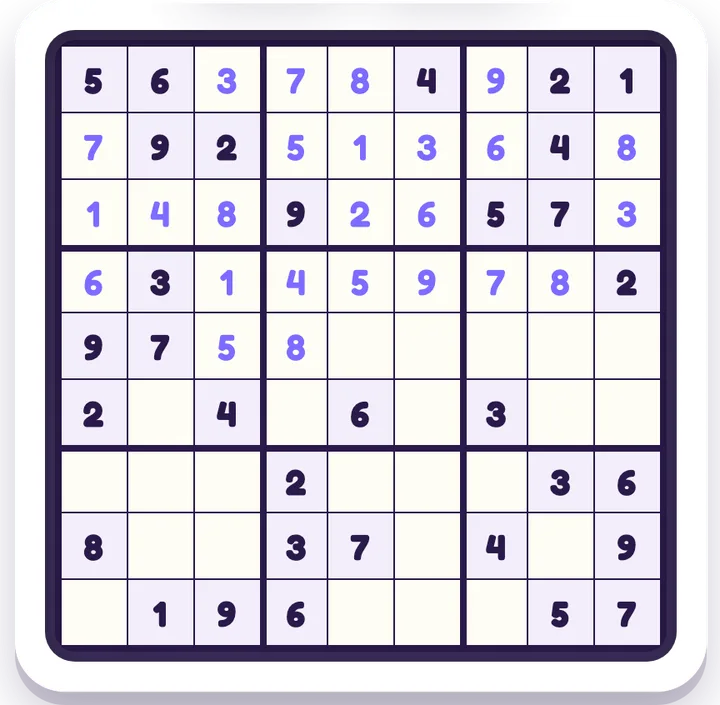
- Sudoku — fill the 9×9 grid so every row, column and box has 1–9, with no guessing required. It's a pure exercise in elimination: "this cell can't be a 7, so..." Working through a hard board teaches patience and systematic thinking better than almost anything.
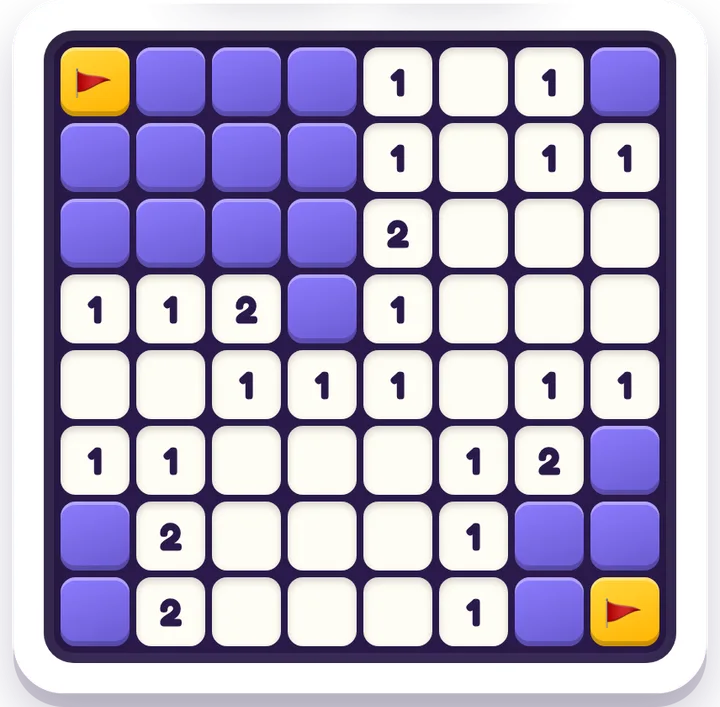
- Minesweeper — read the numbers, deduce where the mines are, and flag them. It's deduction under uncertainty — figuring out what must be true from limited clues, then acting on it. A great lesson that you can reason your way out of a tight spot.
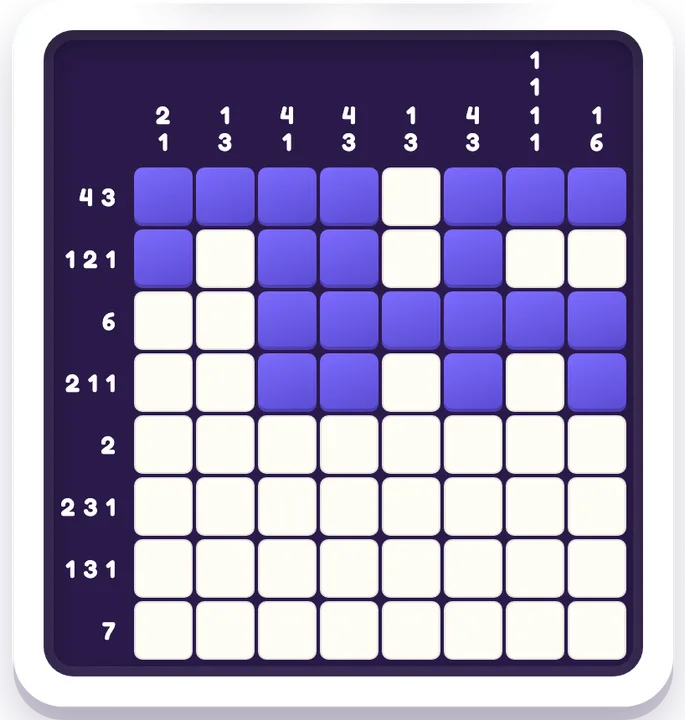
- Nonogram — also called Picross: use the number clues along the edges to reveal a hidden picture, square by square. It blends logic with spatial reasoning, and the little payoff image at the end keeps tweens coming back. Every puzzle has exactly one answer.
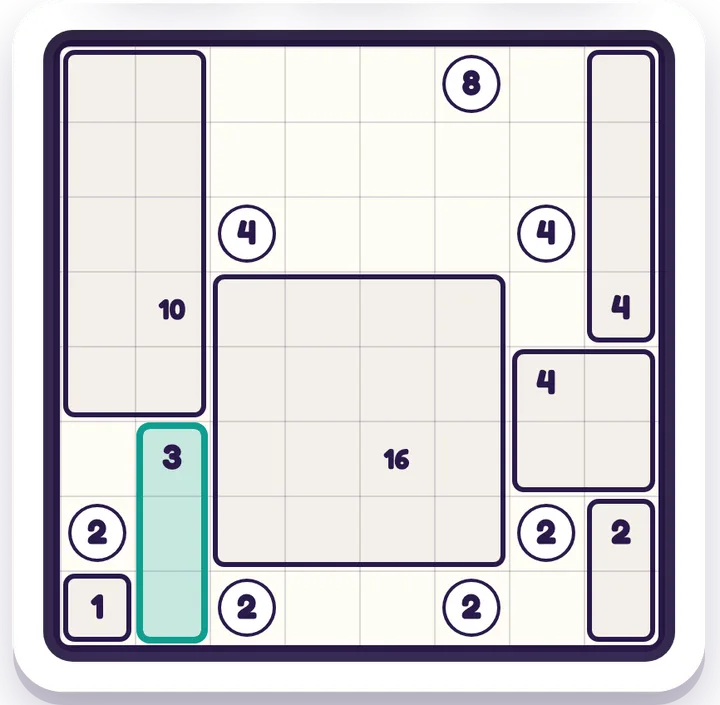
- Box Split — split the grid into rectangles so each one holds exactly one number, and that number is its area. A 12 could be 1 × 12, 2 × 6 or 3 × 4, and working out which one fits is pure elimination. Grids run up to 9 × 9 on Expert, and every puzzle has exactly one answer.
- Number Thread — draw a single line through every square exactly once, passing the numbers in order. It sounds simple until the numbers sit far apart and every corner counts; each puzzle has exactly one thread that works.
How a tween actually cracks one. Sudoku, Nonogram, Box Split and Number Thread never need a guess, and in Minesweeper a guess is the last resort, not the plan — that's the whole lesson. In Sudoku, the way in is scanning: pick a number, run it down each row, column and box, and look for the one empty cell it's forced into — string enough of those forced moves together and the grid unlocks itself. Minesweeper rewards the same habit on a smaller scale: a "1" touching exactly one covered square means that square is the mine, and a number already touching all of its mines means every other neighbour is safe to open. In Nonogram, the trick is to cross-reference — a row clue and a column clue that only agree in one spot give you a square you can fill, or rule out, for certain. Teaching a kid to look for the certain move before the risky one is a genuinely useful way to think, well beyond the puzzle.
Minesweeper, Nonogram and Number Thread live in the logic games hub; Sudoku and Box Split sit in the math games hub.
| Game | Great from | What it builds | Find it in |
|---|---|---|---|
| Sudoku | Ages 8+ | Elimination & patience | Math |
| Minesweeper | Ages 8+ | Deduction under uncertainty | Logic |
| Nonogram | Ages 8+ | Logic + spatial reasoning | Logic |
| Connections | Ages 8+ | Vocabulary & lateral thinking | Word |
| 2048 | Ages 8+ | Number sense & planning | Math |
| Box Split | Ages 7+ | Factor pairs & elimination | Math |
| Number Thread | Ages 7+ | Route planning, one answer | Logic |
| Number Smith | Ages 7+ | Mental arithmetic (Tricky 24) | Math |
| Klotski | Ages 6+ | Spatial planning (81-move classic) | Spatial |
| Checkers | Ages 6+ | Strategy against the computer | Board |
| FreeCell | Ages 7+ | Planning ahead, winnable deals | Cards |
| Spider Solitaire | Ages 8+ | Long-range planning, winnable deals | Cards |
Word and lateral logic
Not all logic is numbers. These reward vocabulary, pattern-spotting, and thinking sideways.
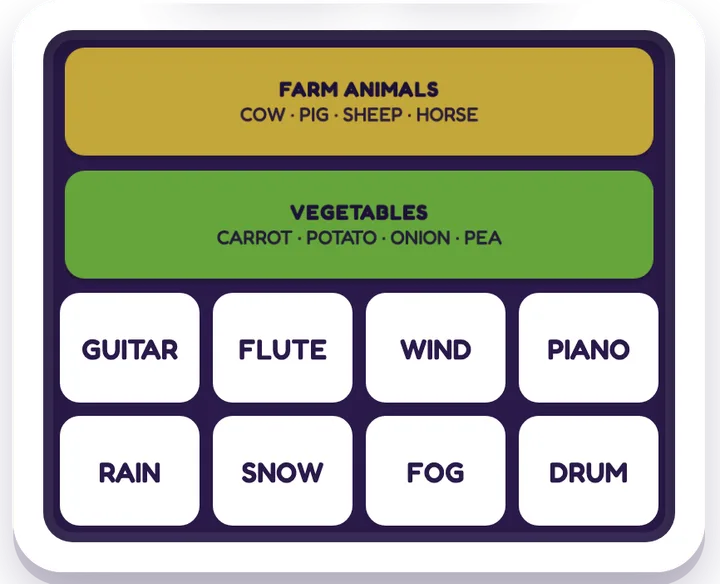
- Connections — sort sixteen words into four hidden groups. The catch is the overlaps: words that look like they belong together are often a trap. It's a brilliant workout for lateral thinking and second-guessing the obvious.
- Word Bee — build as many words as you can from a small set of letters. Half spelling, half stubborn experimentation — exactly the kind of "just one more" puzzle tweens like.
- Mini Crossword — a quick, bite-sized crossword that's solvable in a few minutes. Lower-pressure than a full grid, but it still stretches vocabulary and general knowledge.
Find more of these in the word games hub.
Number logic and planning
For tweens who like a target to beat and a plan to build, these reward thinking a few moves ahead.
- 2048 — slide the tiles so matching numbers merge and double, all the way up to the 2048 tile. The trick is anchoring your biggest tile in a corner and planning your merges, not chasing every quick one. It's quietly all about powers of two and looking one move ahead. (We've got a full strategy guide if they want to actually win.)
- Number Smith — four numbers, one target, + − × ÷. Tweens can skip straight to Medium (Make 24) and then Hard (Tricky 24), where puzzles have just one or two ways in and the trickiest need a fraction on the way. Proper mental-arithmetic stretch, with Undo when a line of attack runs dry.
- Mahjong Connect — a lighter, more visual option: clear the board by linking matching tiles with a path that turns no more than twice. It's path-finding and forward planning without the heavier deduction load — a good palate-cleanser between Sudoku sessions.
2048, Number Smith and Sudoku all sit in the math games hub. They don't look like maths homework, but that's the point — they build number sense, place value and a habit of planning ahead while a tween thinks they're just playing.
Strategy & planning
The other big jump at this age is playing the long game — holding a plan over dozens of moves, or out-thinking an opponent.
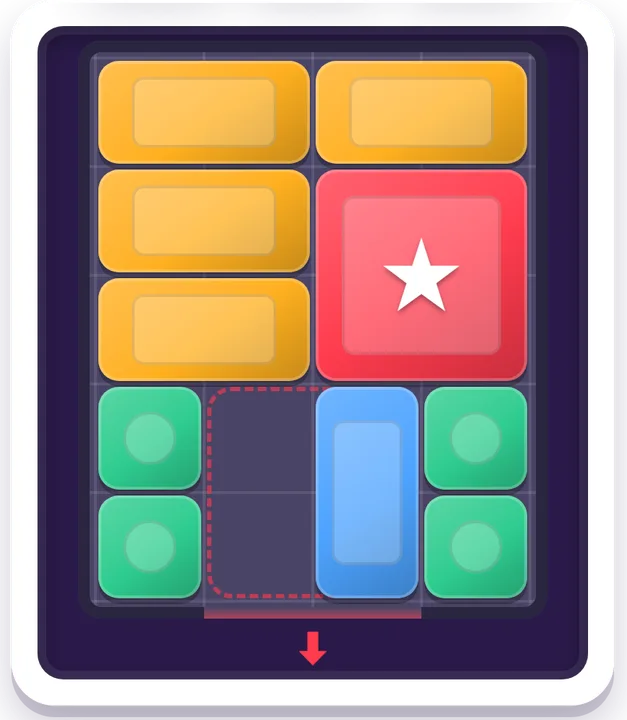
- Klotski — the classic sliding-block puzzle: slide the blocks until the big red square escapes through the gap. Each level shows the fewest moves its puzzles need, and Expert ends with the famous classic layout, which takes 81. Hint, Undo and Watch Solve keep it from becoming a brick wall. It lives in the spatial games hub with Lot Shuffle and Slide Quest.
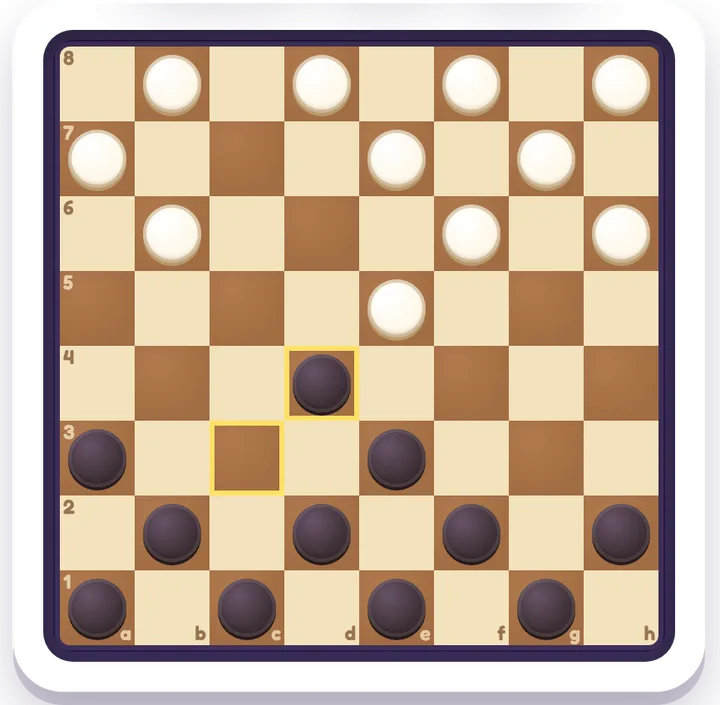
- Checkers and Gomoku — two strategy duels against the computer (there's no two-player mode). Checkers plays by American rules on the English site, with Brazilian and Russian rules a tap away in Settings; Hard thinks many moves ahead. Gomoku is freestyle five-in-a-row — six counts too — on 11×11 up to the full 15×15 board, and you choose who starts. Both are in the board games hub.
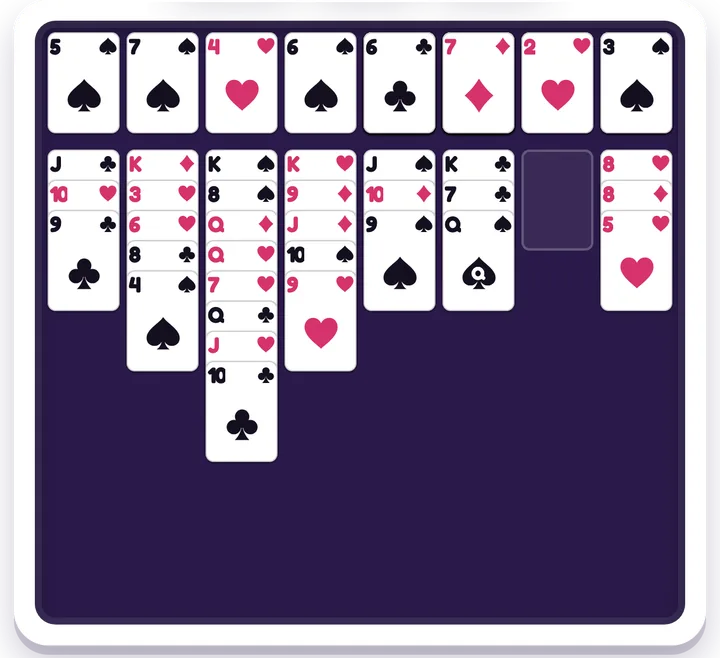
- FreeCell and Spider Solitaire — patience games where planning beats luck. In FreeCell every card is face up from the start (Hard gives you only 3 free cells instead of 4); Spider builds eight King-to-Ace runs with 1, 2 or 4 suits. In both, every numbered deal can be won, and Undo is always free. Find them in the card games hub.
How to get them started
If a puzzle looks intimidating, the fix is almost always to start smaller and slower:
- Begin on Easy. Every game has difficulty levels; an Easy Sudoku or a small Minesweeper board builds the habit before the real challenge arrives.
- Use the pencil marks. Sudoku's Notes let a tween jot the "maybes" into a cell, exactly like on paper — it turns what feels like guessing into a clean process of elimination.
- Make it a five-minute ritual. A round of Word Guess is a low-stakes habit; sitting alongside for the first few rounds is the best way to pass on the reasoning.
- Let them be stuck for a minute. The productive struggle is the point — reach for the Hint only after a genuine try, not at the first dead end.
Hints when they're stuck, not stuck-for-good
The whole point of a hard puzzle is that it's hard — but a tween shouldn't have to abandon a board in frustration. Most games here come with three safety nets:
- A Hint button that nudges them toward the next logical step without handing over the answer.
- A Watch-Solve option that walks through the solution, so a stuck kid can learn the reasoning instead of just rage-quitting.
- Difficulty levels — start easy, move up as it clicks. A puzzle that's too hard one week is the right level a month later.
That mix is what keeps a challenging board from ending in tears. Stuck doesn't mean stuck-for-good.
Games that grow with them
Here's the part parents tend to appreciate most: none of these have an upper age limit. Sudoku, Minesweeper, Nonogram and Connections are genuinely good puzzles for teenagers and grown-ups too — the same site keeps earning its place as your kid gets older, and plenty of adults end up playing alongside them. There's no "graduating" off it; the puzzles just keep being worth solving. (Our parents' guide to free, ad-free games lays out the bigger picture.)
A few more reasons it fits this age well: it runs in any browser on whatever device is handy, it's light on bandwidth, it comes in 12 languages, and it has light and dark themes for evening wind-down. And because there are no ad networks, there's simply nothing unsuitable sitting in an ad slot for a curious tween to stumble into.
Where to go next
If you want to read more before handing over the device:
- The younger band deep-dive — free brain games for kids 7–9 — for a sibling who isn't quite a tween yet.
- The skill-focused free math games for practice, if the goal is shoring up number facts alongside the fun.
- The full parents' guide to free, ad-free games for the whole catalog at a glance.
Ready to hand them a real challenge? Browse all free games →