Free Board Games for All Ages
Classic board games against the computer: take your turn, then watch it take its own. Free forever — no ads, no sign-ups, and no downloads, on any device.
These are two-player games where the computer is your opponent, so there's always someone to play with. Mancala is the seed-sowing game played here with Kalah rules: scoop up the seeds from one of your pits and drop them one by one around the board, landing in your own store for an extra turn. The seeds move slowly enough to count, which makes it lovely counting practice for younger children. Checkers is the jumping-and-crowning classic, with American, Brazilian or Russian rules to choose from — it starts on the set closest to the rules usually played in your language. Gomoku is the five-in-a-row game played with Go stones: take turns placing a stone where two lines cross, and be the first to line up five — on a small 11×11 board on Easy, up to the full 15×15 on Hard. On Easy the computer makes mistakes on purpose, so a young child can win; Hard plays carefully enough to test a grown-up.
Play these free games
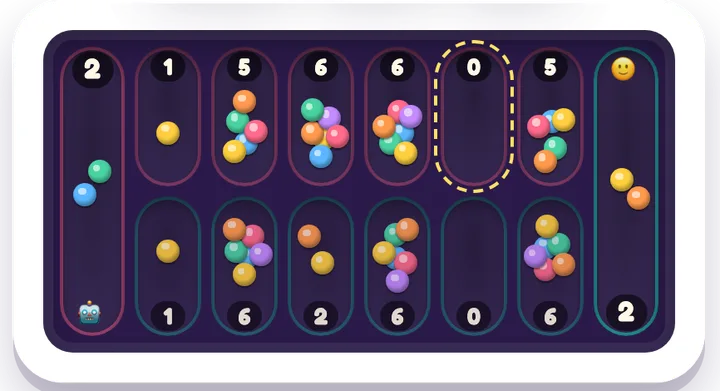
Mancala
Sow seeds and out-collect the computer in this ancient counting game.
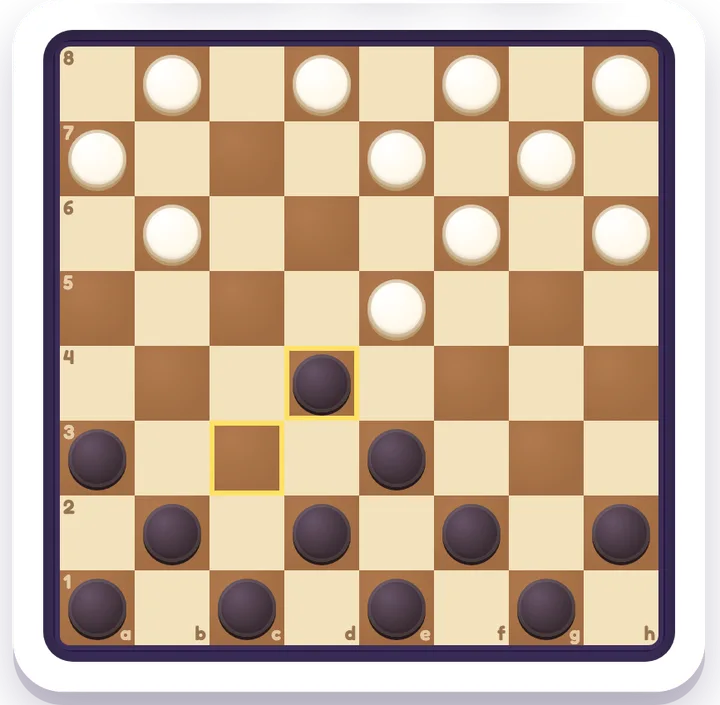
Checkers
Jump, capture and crown your kings against the computer — with American, Brazilian or Russian rules.
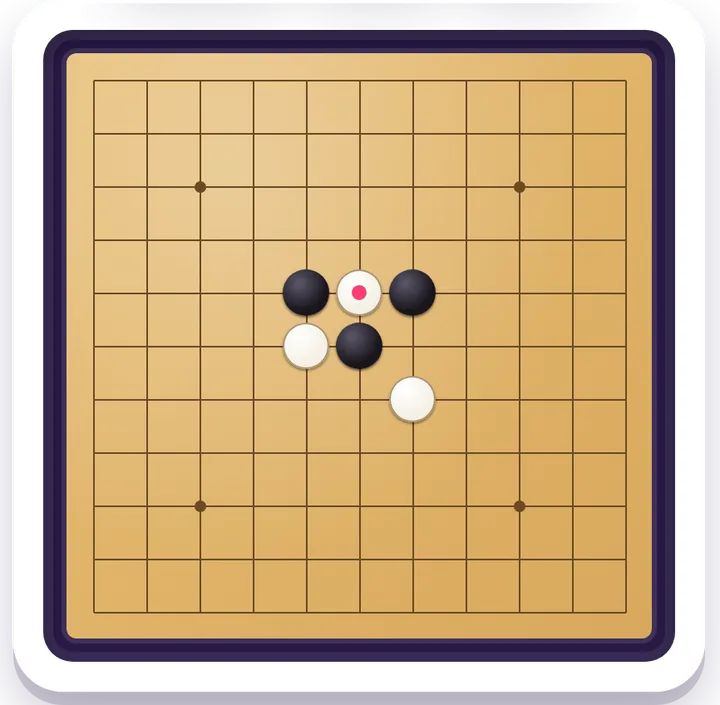
Gomoku
Take turns placing stones and be the first to line up five in a row against the computer.
What these games build
thinking ahead, counting, and strategy.
Frequently asked questions
- Can my child actually beat the computer?
- Yes. On Easy the computer deliberately makes mistakes, so a child who is still learning the rules can win, and Medium and Hard get steadily stronger. If a game goes wrong, Undo takes back your move and the computer's reply, and Hint highlights a good move without playing it.
- What are the different checkers rules?
- American rules (also called English draughts) let ordinary pieces move and jump forward only, and kings move one square at a time. Brazilian rules — the international rules on an 8×8 board — let pieces jump backwards too, give kings long 'flying' moves, and make you take the jump that captures the most pieces. Russian rules are similar, but you may pick any jump, and a piece crowned in the middle of a jump keeps jumping as a king. You can switch in Settings.
- What is Mancala?
- One of the oldest families of board games in the world. You sow seeds around a board of pits and try to collect more in your store than your opponent. This version uses Kalah rules — six pits a side with four seeds in each — where landing your last seed in your store gives you another turn and landing it in an empty pit of your own can capture the seeds across from it.
- How do stars work in games against the computer?
- Beat the computer with no help for three stars. Hints, Undo and Watch Demo each count as help: up to two helps still earns two stars, and more earns one. A loss or a draw earns no stars, and Play Again starts a fresh game on the same level.
- Who goes first?
- You choose in Settings: you, the computer, or take turns from game to game. Going first is an advantage in Mancala and Gomoku, so letting the computer start is an easy way to make a game harder.
- What is Gomoku?
- A two-player stone game known as 五子棋 in China and 五目並べ in Japan. Take turns placing a stone on any empty point, and the first to get five or more in a row — across, down or diagonally — wins. Stones never move and are never captured, so it's quick to learn, and the board grows from 11×11 on Easy to 15×15 on Hard. On a phone the first tap shows a see-through stone and a second tap places it, so a slip never costs a move.